
Why Wood Floors Fail from Within |
(Failure from Within Explained)
Moisture, Load, and Why Some Floors Cannot Be Restored by Cleaning
Some floors don’t fail because they’re dirty.
They fail because the system underneath them has already broken.
And by the time it becomes visible,
cleaning is no longer the solution.
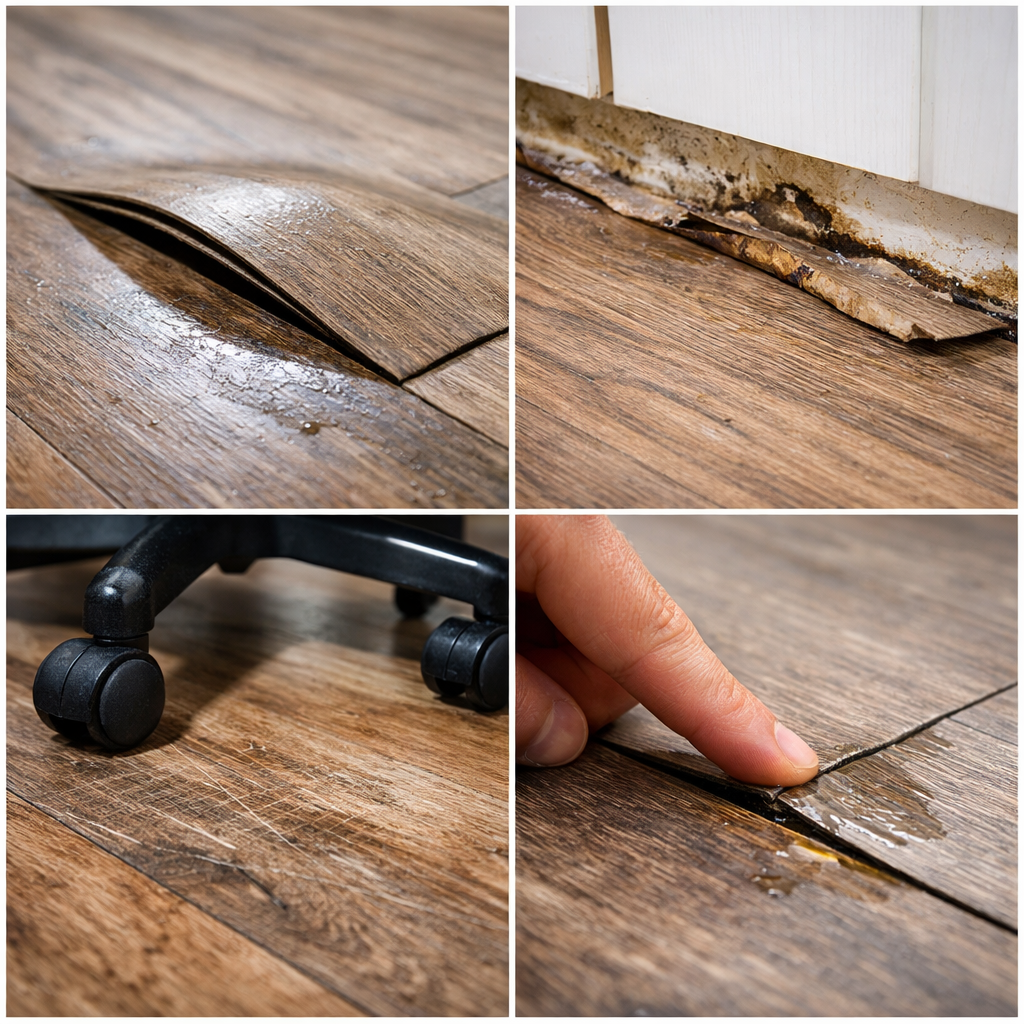
This is about system-level failure, including:
Moisture trapped beneath flooring
Adhesive or locking system breakdown
Repetitive load from chairs and traffic
Surface fatigue and delamination
What looks like a cleaning issue is often a structural failure already in progress.
What You’re Seeing
Cracking under chairs
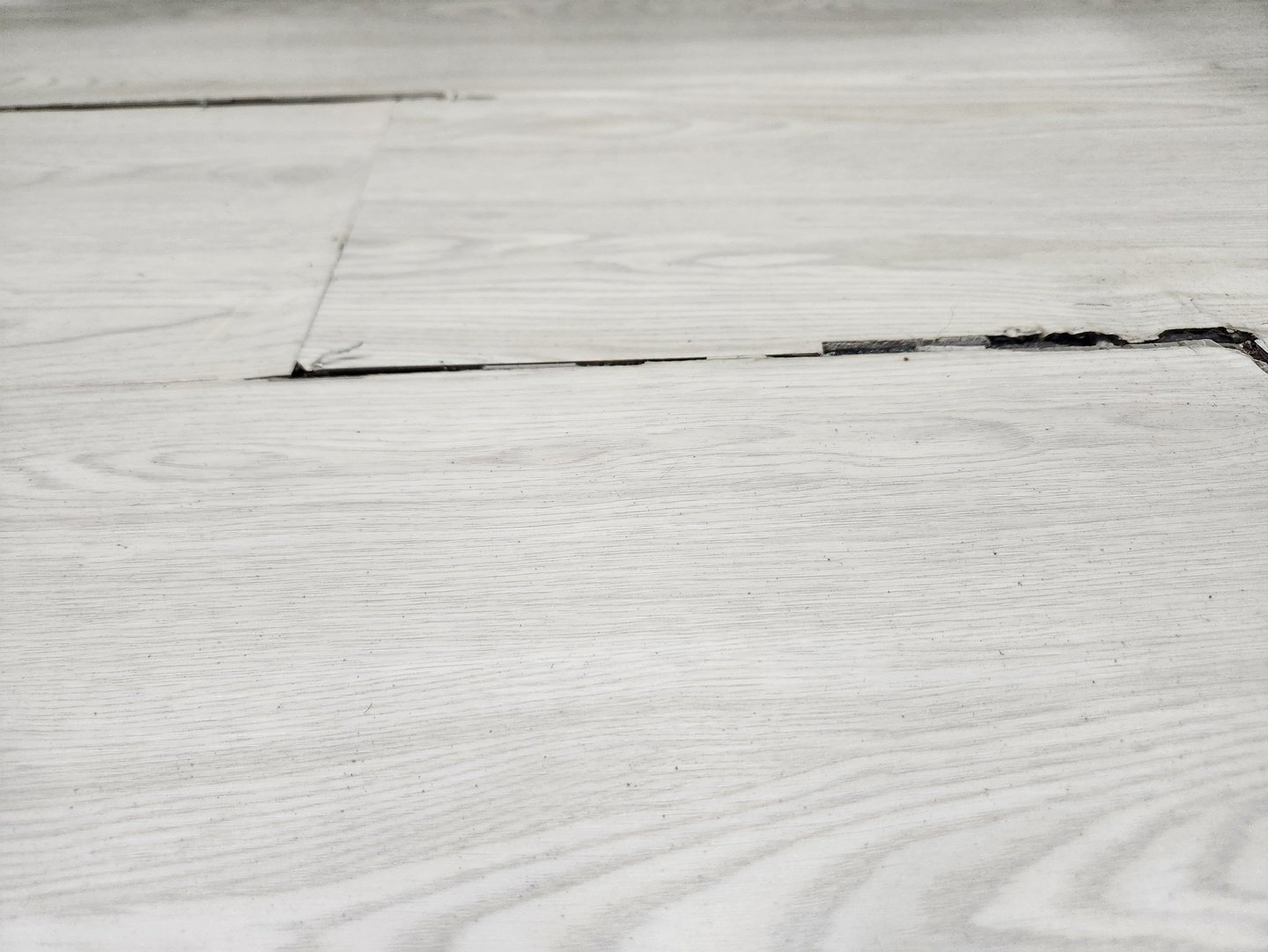
Movement between planks
Uneven reflection after cleaning
Damage appearing in patterns
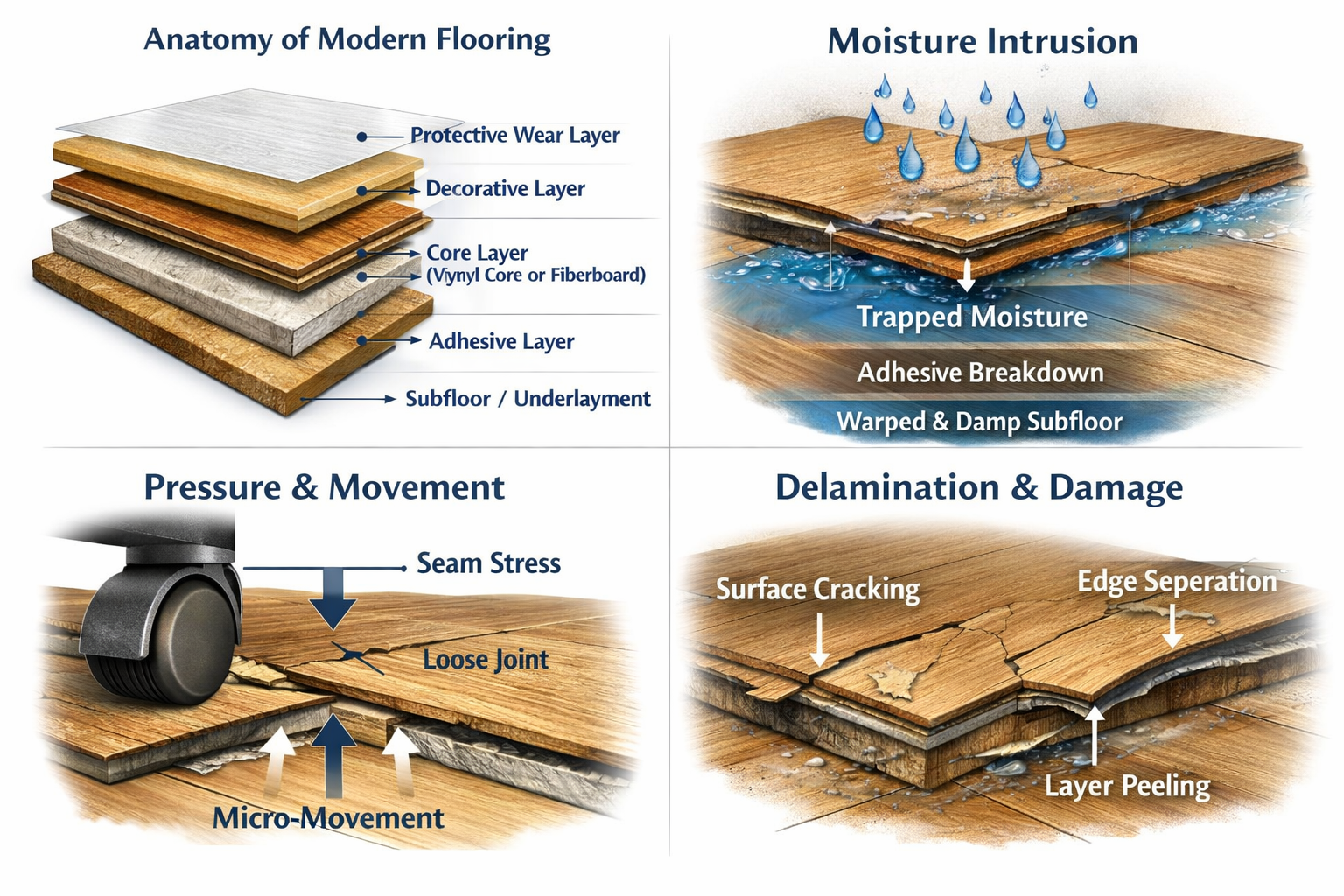
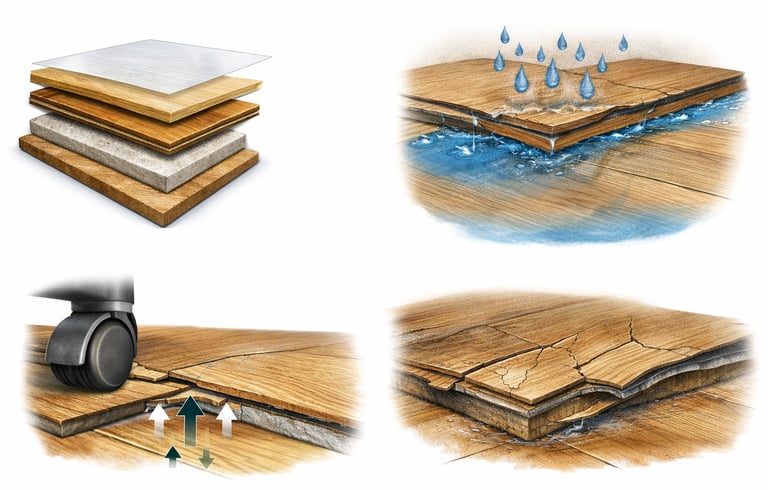
Anatomy of Modern Flooring
Delamination & Damage
Micro-Movement
Seam Stress
Layer Peeling
Surface
Cracking
TWO COMMON FAILURE SCENARIOS
Post-Flood Structural Failure
After flooding or water intrusion:
Moisture remains trapped below planks
Subfloor and underlayment stay damp
Adhesives weaken or release
Even when the surface looks dry,
the structure is already compromised.
Mechanical Failure Under Chairs
(No Flooding)
In newer facilities, a different pattern appears:
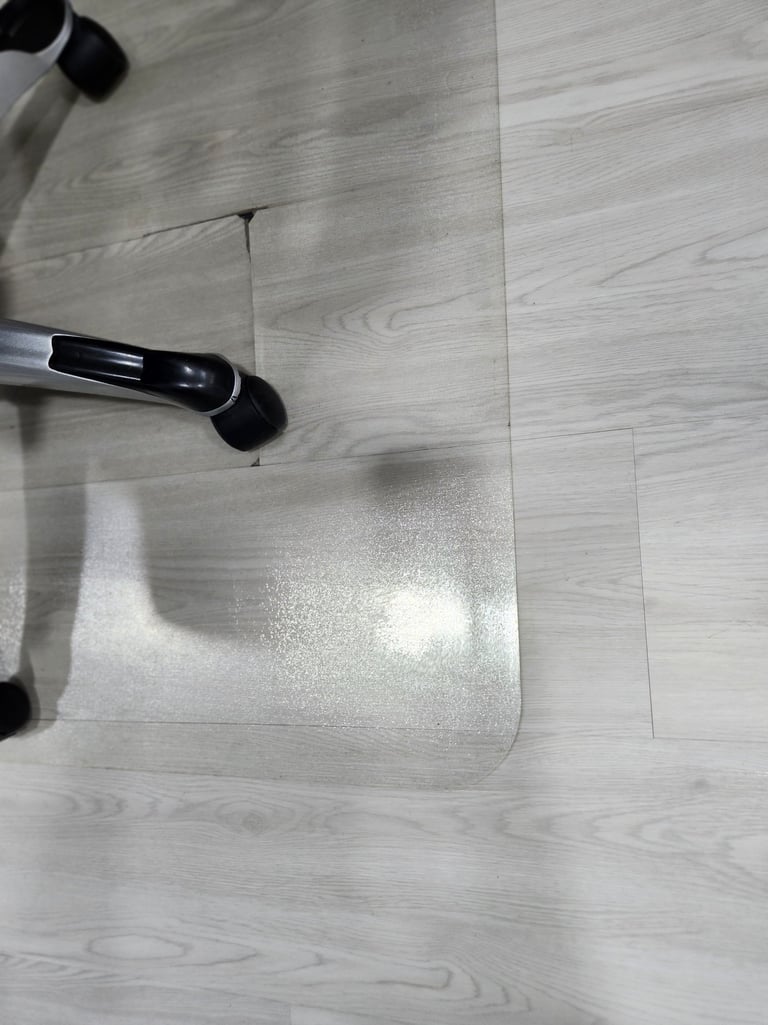
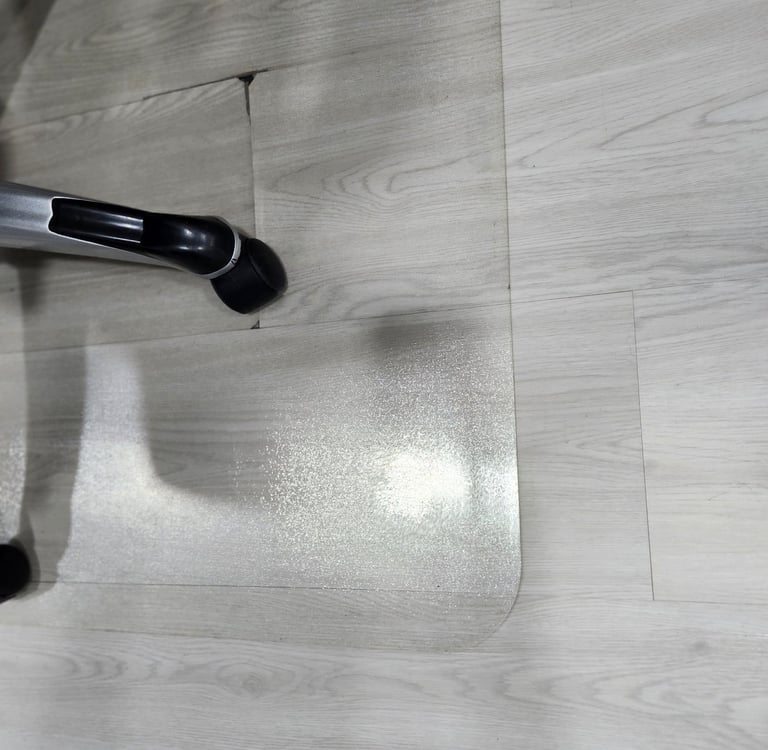
Damage concentrated under rolling chairs
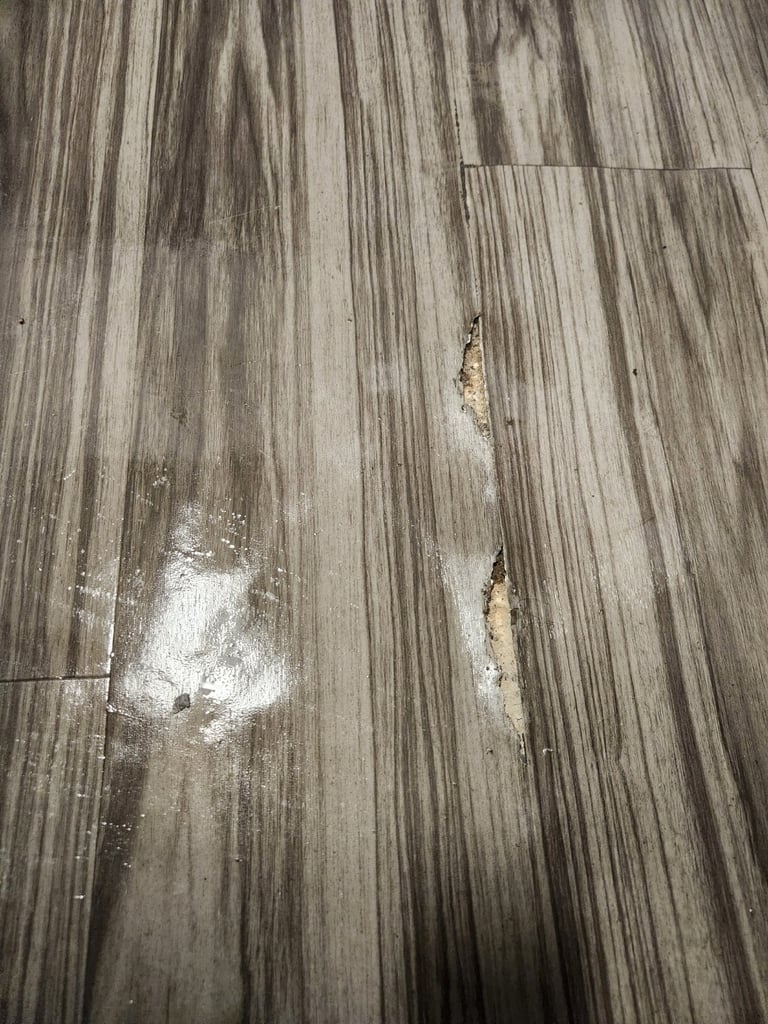
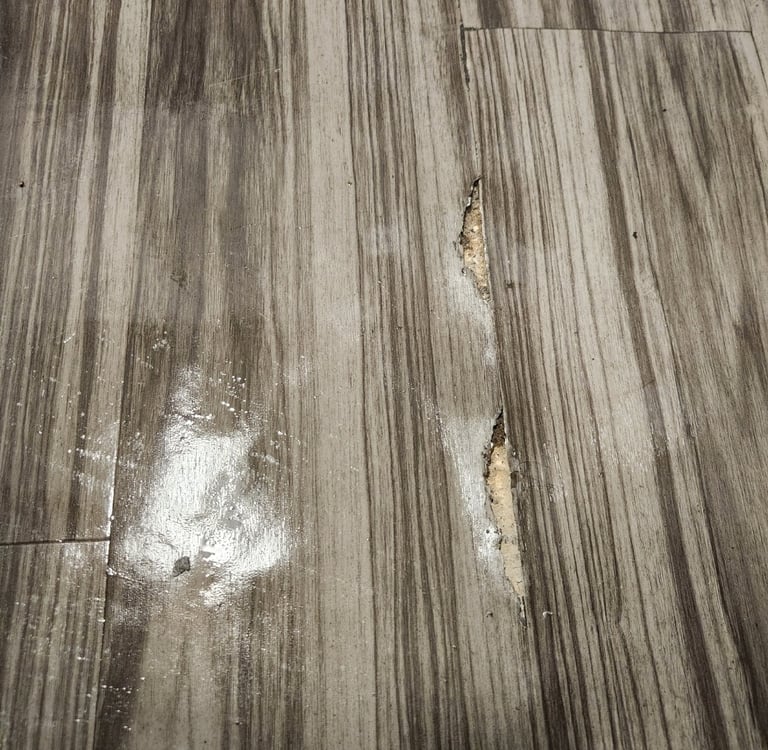
Cracking or “star” fractures
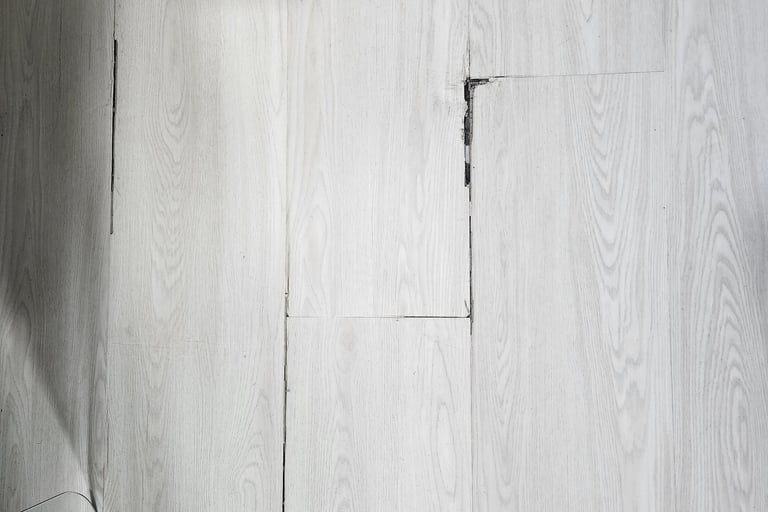
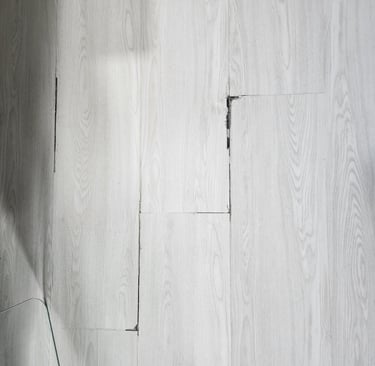
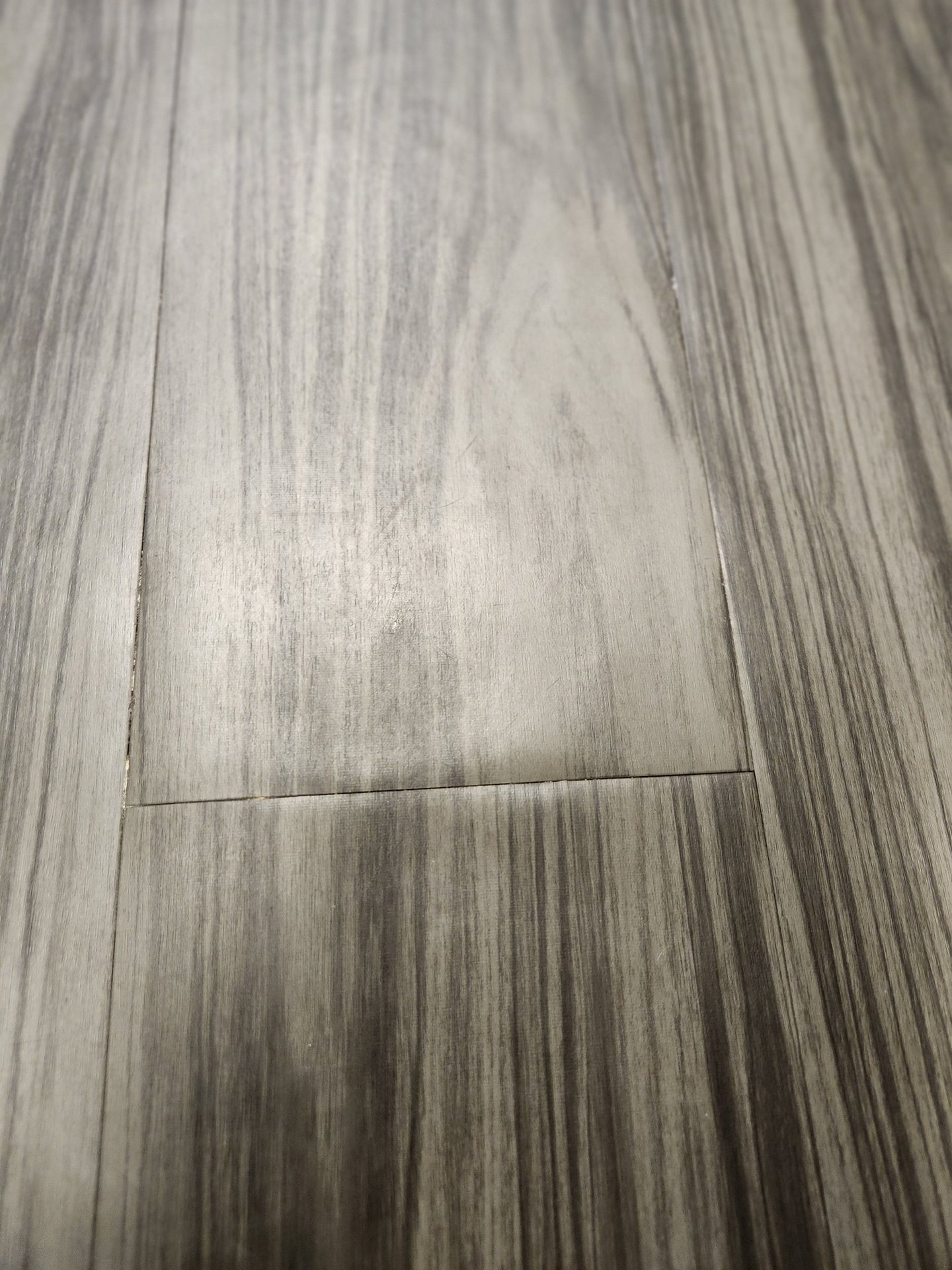
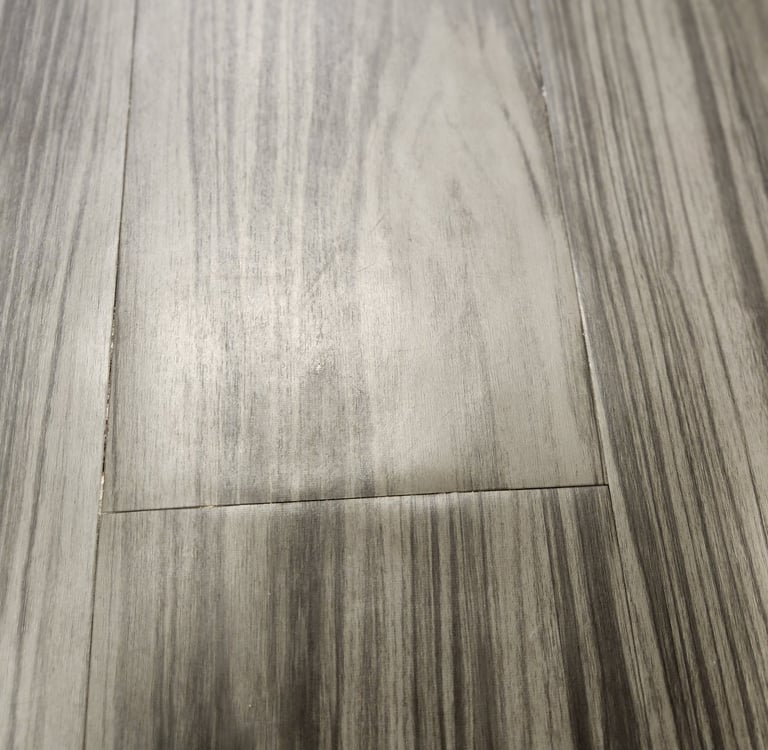
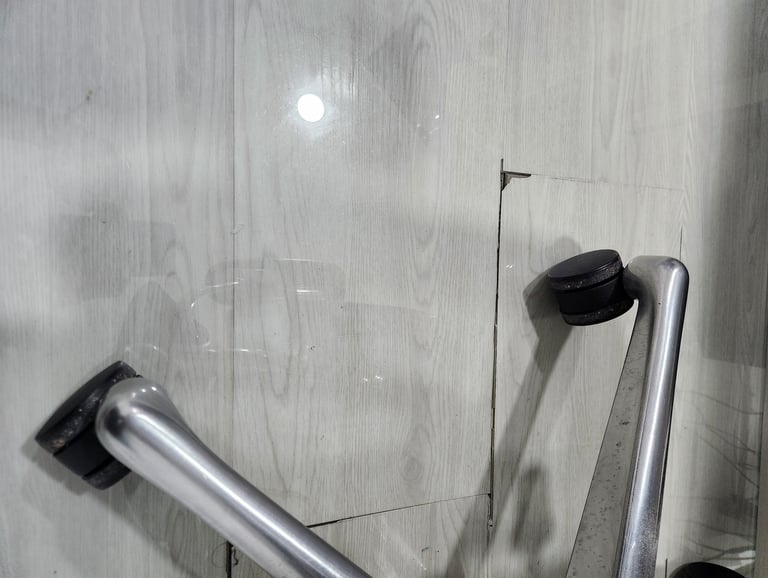
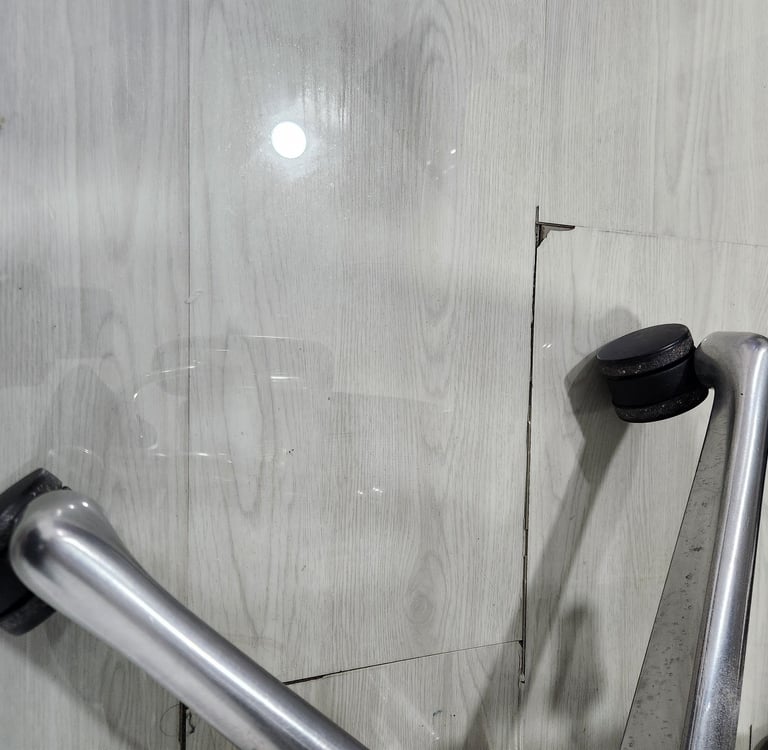
Movement between planks
This is caused by:
Concentrated point load
Repetitive rolling friction
Micro-flexing of the flooring system
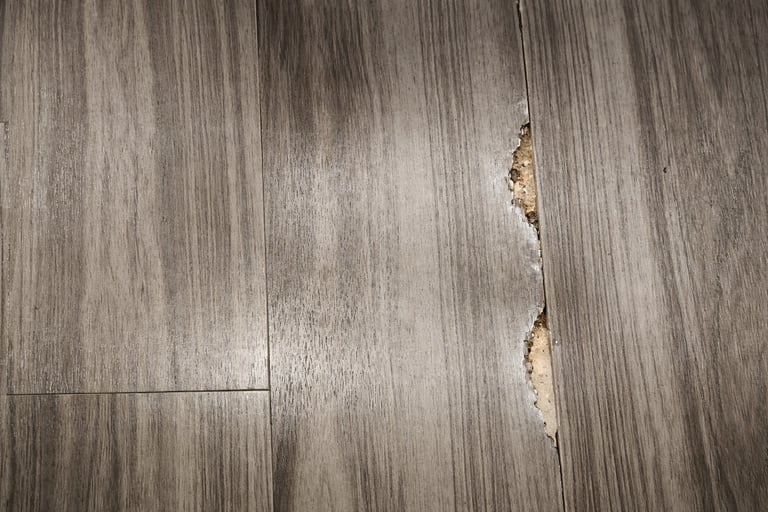
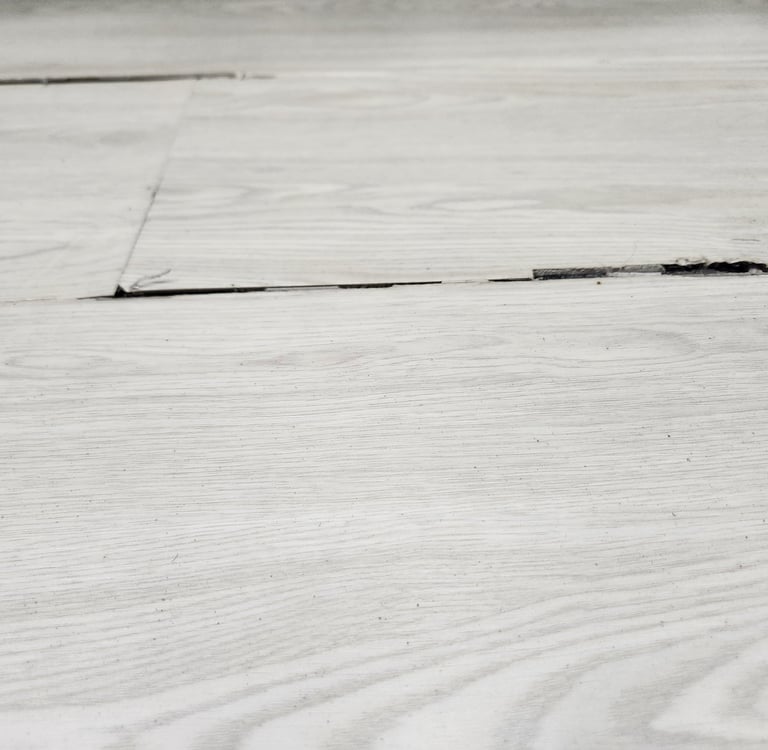
Observed condition: plank separation due to subfloor instability and repeated load.
Moisture
Moisture weakens the structure from below:
bond loss
instability
long-term breakdown
Load & Friction
Daily use creates stress:
rolling chairs
repeated pressure
concentrated wear zones
Where They Connect
Moisture is not always the cause.
But once present, it accelerates failure.
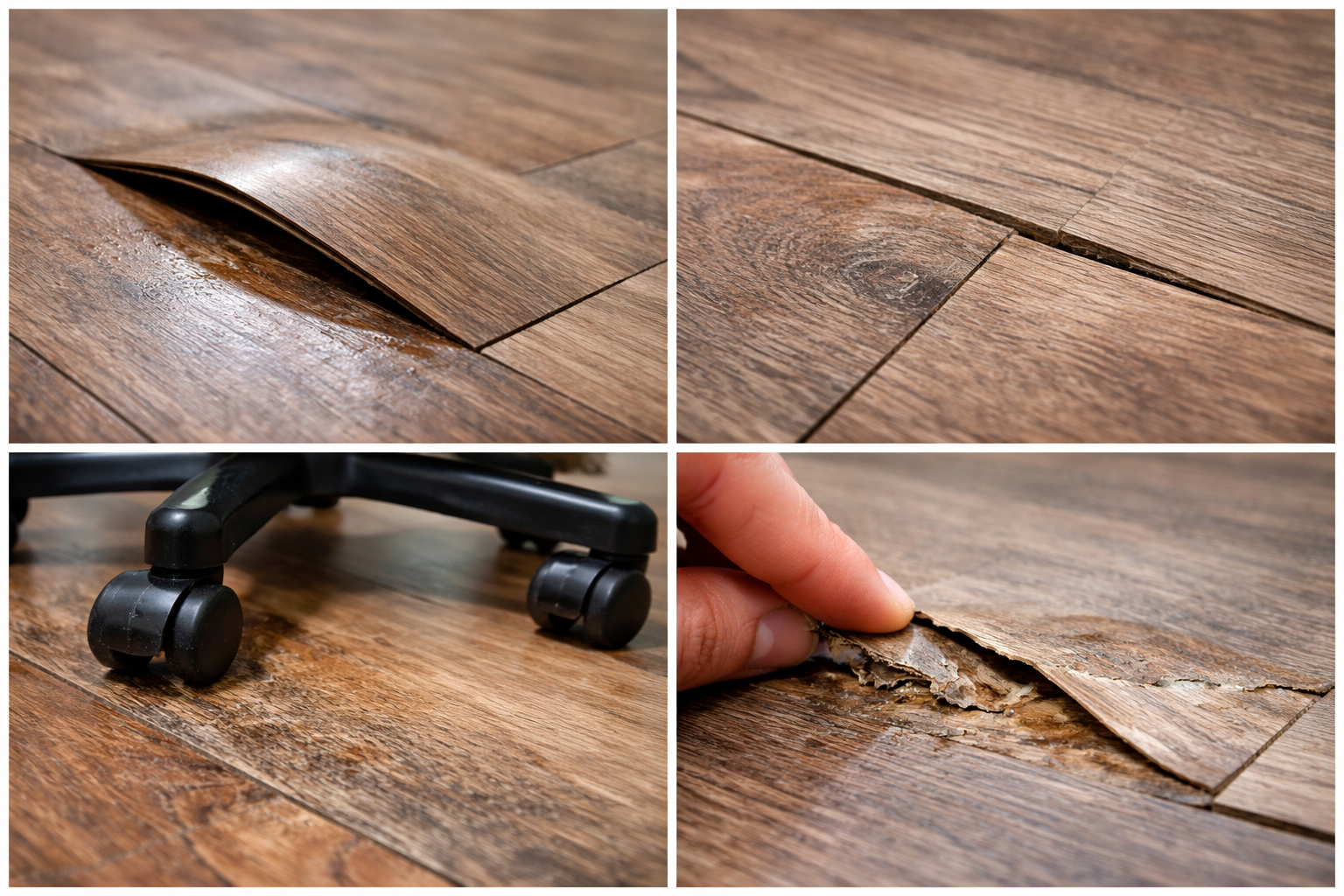
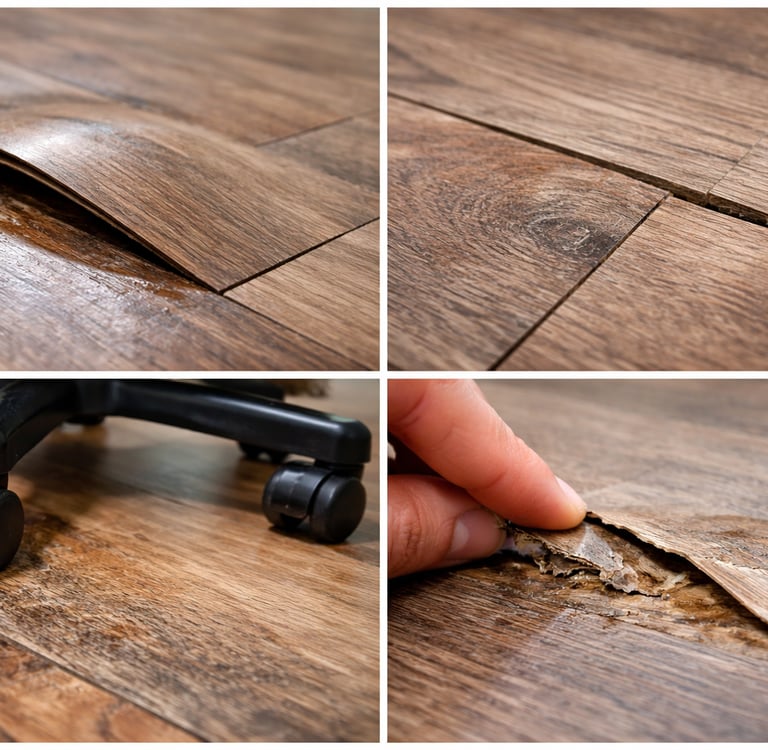
Planks lifting upward
Pressure from moisture underneath
Subfloor expansion pushing material up
Planks pulling apart
Adhesive or locking failure
Movement over time
Adhesion & Structural Instability
Bubbles under the surface
Separation of layers
Adhesive breakdown
Structural fatigue
Edge breakdown
Final stage of failure
THE CLEANING MISCONCEPTION
When floors look worse after cleaning,
it’s often misunderstood.
Cleaning did not create the problem.
It revealed it.
Cleaning maintains a material.
It does not restore a failed system.
These conditions are often interconnected—and once they begin, they progress under normal use.
This is often the point where repeated cleaning becomes frustrating—because results no longer match the effort.
WHY RESULTS BECOME INCONSISTENT
At this stage:
The wear layer has lost integrity
The core is no longer stable
The system is moving under load
Even perfect cleaning will result in:
uneven finish
inconsistent reflection
recurring defects
A floor may look dull or uneven after cleaning—not because of residue, but because the surface itself is no longer stable.
WHERE MOST FAILURES BEGIN
After water exposure, proper protocol should include:
Removing affected sections
Fully drying subfloor and underlayment
Verifying moisture levels before reinstalling
Surface drying alone is not sufficient.
In many cases, this step is overlooked—not intentionally, but because surface drying appears sufficient.
WHAT WE ADJUST (PROFESSIONAL CARE)
Low-moisture cleaning methods
Controlled drying practices
Reduced moisture exposure in stress zones
Material-aware maintenance protocols
1. Moisture beneath the surface 2. Structural instability begins 3. Load accelerates failure
Surface Instability Under Load
Observed Condition: Cracking beneath chair zones
Underlying Cause: Concentrated rolling friction over a weakened structure
Implication: Surface failure is progressive and not correctable through cleaning
What We Do When We See This
We assess → We adjust cleaning → We identify structural issues → We advise next steps
WHAT CLIENTS SHOULD CONSIDER
Chair type and wheel material
Use of proper floor protection systems
Avoiding trapped moisture under mats
Early intervention when movement begins
Not every surface needs more cleaning.
Some surfaces require a shift in approach.
This is where material-aware care becomes essential.
What This Means for Your Space
Not all floor issues can be resolved through cleaning
Early signs should be evaluated—not corrected repeatedly
Some conditions require adjustment, not maintenance
Continuing normal use can accelerate visible damage
Preventable damage should never become replacement.
Understanding how and why surfaces deteriorate is the first step toward protecting them.
Our approach begins with evaluating existing conditions, identifying risk factors, and aligning maintenance methods with the materials in place.
Start with a structured surface assessment to identify risks before they become irreversible and costly.