We approach properties as systems of materials, finishes, fabrics, and exposure patterns — not just surfaces to clean.

Veppa Surface Integrity & Infection Control Protocol (SIICP)

with Integrated Measurement & Verification. This protocol operates within the Veppa Method and supports the Environmental Stability Framework.


A Structured Approach to Documented and Verified Surface Care

Effective surface care is not based on assumption.
It requires
observation, documentation, and—when appropriate—measurable verification.

Our approach integrates structured documentation with targeted monitoring methods to ensure that surface conditions are understood, treatments are appropriate, and results remain consistent over time.

What This Protocol Is

The Veppa Surface Integrity & Infection Control Protocol is a structured system for maintaining surfaces through:

material-aware care

controlled cleaning processes

documented verification

It is designed for non-clinical environments where surface condition, environmental exposure, and contamination risk must be managed without unnecessary intervention.

Why Measurement Matters

In many environments, surfaces are maintained without a clear understanding of their condition or response to treatment.

This often leads to:

unnecessary chemical use

surface degradation

inconsistent results

misdiagnosis of damage

A measured approach allows for informed decisions, controlled intervention, and long-term material preservation.

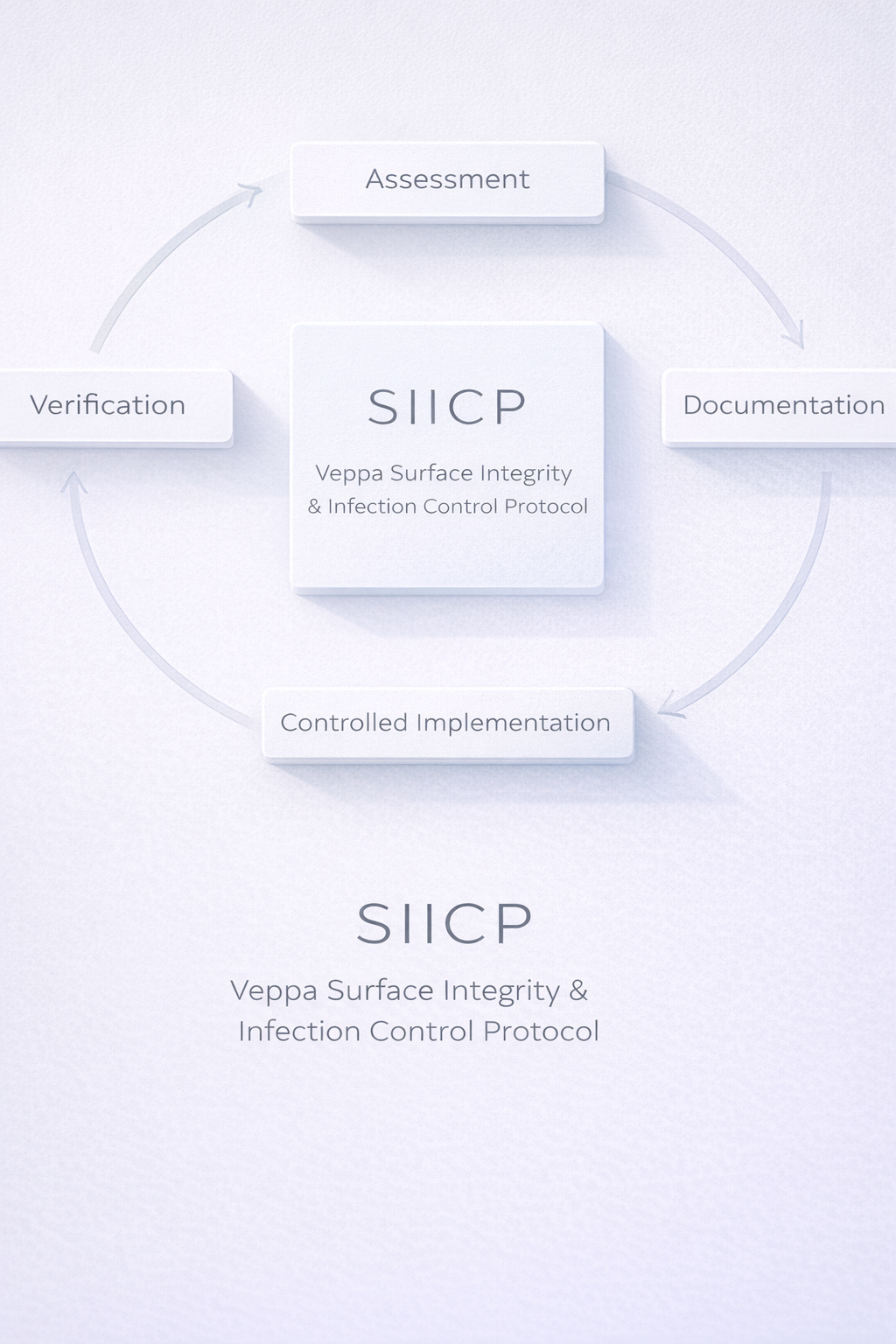
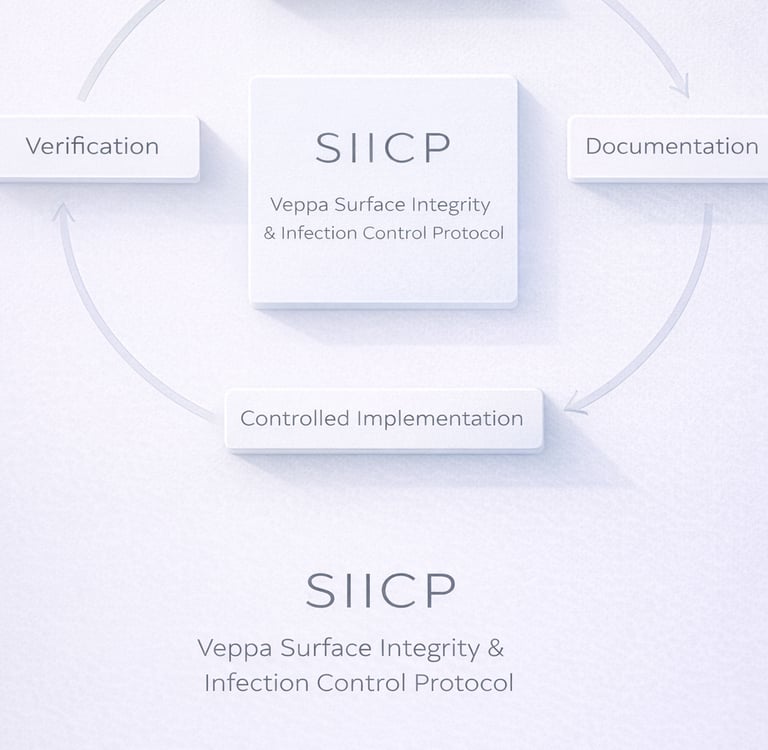
The SIICP Framework

Every environment is managed through a structured cycle:

Assessment → Documentation → Controlled Implementation → Verification → Ongoing Control

This ensures that care is not reactive—but systematic, traceable, and consistent over time.

Documentation Through System-Based Tracking

All services are supported by a structured documentation system.

This includes:

  • Surface identification and material classification

  • Service history and treatment records

  • Product usage and application notes

  • Environmental observations

  • Scheduled maintenance tracking

This information is maintained within our internal system and, where applicable, made accessible through the client portal.

ATP Surface Testing (When Applicable)

In select environments, ATP (Adenosine Triphosphate) surface testing is incorporated as a verification tool.

ATP testing is used to:

  • assess the presence of biological residue

  • validate cleaning effectiveness

  • identify inconsistencies across surfaces

This method is applied selectively—based on environment type, risk level, and client requirements.

It is not used as a universal metric, but as a targeted tool within a broader system of evaluation.

Environmental Monitoring

Surfaces do not exist in isolation.

Their condition is influenced by:

  • traffic patterns

  • moisture exposure

  • environmental conditions

  • frequency of use

Monitoring these variables allows for:

  • better planning of interventions

  • reduction of recurring issues

  • improved long-term outcomes

Measured, Not Assumed

Our process moves beyond visual inspection alone.

Surface conditions are:

  • observed

  • documented

  • and, when appropriate, verified

This enables a precise and responsible approach, reducing unnecessary intervention while maintaining high standards of cleanliness and material preservation.

Integration with the Veppa Method

Measurement and verification are fully integrated into the Veppa Method, supporting:

material-aware decision-making

controlled cleaning and disinfection

long-term surface integrity

Applicable Environments

This protocol is applied across:

  • High-end residential environments

  • Commercial facilities

  • Offices and shared spaces

  • Environments requiring controlled surface care and documentation

System Integration

All protocol phases are supported by structured documentation, enabling:

  • tracking of surface conditions

  • visibility into service history

  • verification of outcomes over time

What This Looks Like in Practice

Example:

Surfaces are identified and classified

Environmental factors are recorded

Care protocols are assigned per material

Results are documented and tracked over time

Assessment Before Intervention

Every engagement begins with a structured surface assessment.

This ensures that all actions are based on actual conditions—not assumptions.

Request an assessment to determine the appropriate level of care, intervention, and monitoring for your environment.